
The brewing industry is shifting toward alcohol-free beers, tighter resource controls, and deeper digital integration—and Krones will showcase how these trends translate into real-world solutions at BrauBeviale 2026, running from November 10 to 12. The company will display innovations across the entire value chain, from fermentation to packaging, in Hall 7A. The focus spans three key areas: process technology for low-alcohol production, glass bottle efficiency, and digital tools to streamline operations.
Fermentation and flavor: Steinecker’s global rollout
Alcohol-free beer demand is driving changes in fermentation. Krones’ Steinecker division has refined its dynamic fermentation process, now operational at multiple customer sites worldwide. The system combines the Poseidon circulation unit with Crabtree-negative NEER yeasts from Novonesis, a partnership that improves efficiency and consistency. Early adopters’ feedback is shaping further refinements, with Steinecker positioning the technology as adaptable beyond brewing.
At BrauBeviale, the company will debut an application for special vessel manufacturing in spirits production, demonstrating its stainless steel processing expertise in non-beer sectors. Separately, Krones will highlight its extraction system, designed for gentle flavor recovery in tea, ready-to-drink beverages, and both alcoholic and non-alcoholic products. The system aims to preserve valuable ingredients while expanding Krones’ portfolio for beverage processors.
The process technology display will also feature contributions from Evoguard, with solutions focused on balancing efficiency, quality, and flexibility—three priorities that overlap across the industry’s evolving needs.
Read Also: Prosur highlights clean-label solutions for Asia’s new food rules
Glass bottles stay dominant, but efficiency is the new standard
Glass remains the preferred packaging for beer, but handling it cost-effectively is becoming critical. Krones is introducing the Lavasonic HI, a bottle-cleaning module that uses ultrasound to cut energy and water use while maintaining high standards. The system targets breweries looking to reduce operational costs without compromising hygiene.
Filling technology advances with the Modulfill HES, a high-speed glass bottle filler entering serial production by year’s end. The system reaches up to 78,000 bottles per hour, with upgrades for operator ease, footprint reduction, and, most importantly, lower oxygen exposure to extend shelf life. The redesign prioritized product quality alongside output, a common trade-off in modern breweries.
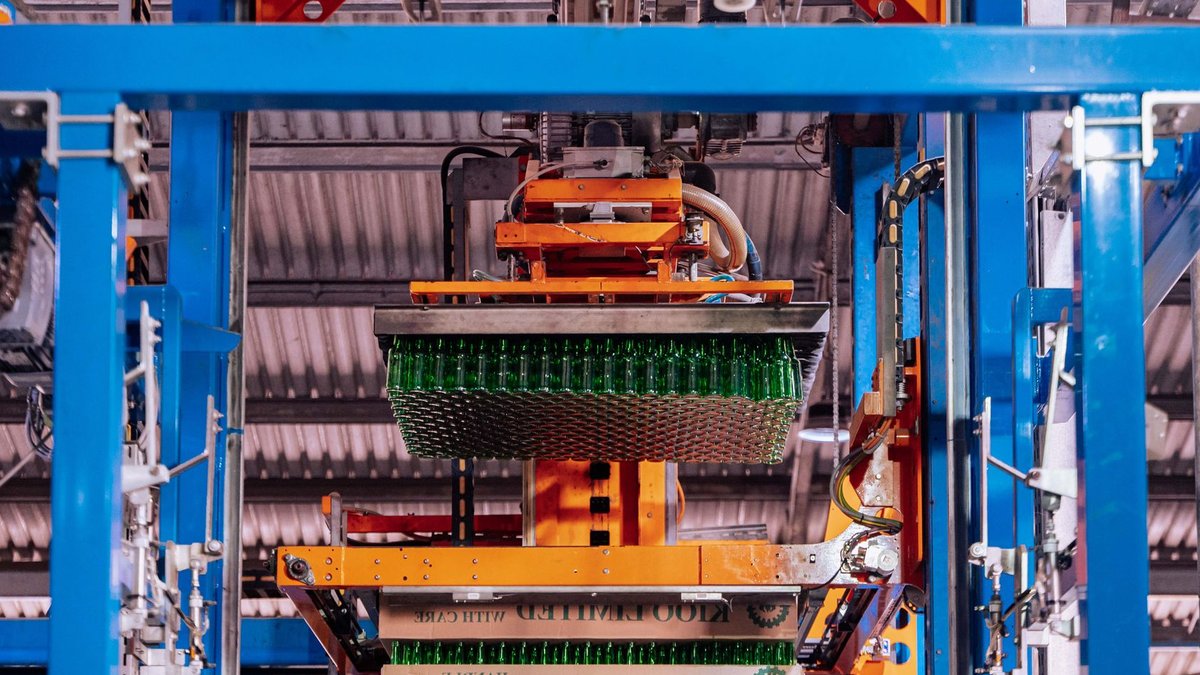
Flexibility in packaging is another challenge. The Smartpac NXT addresses format diversity, handling glass and PET bottles alongside varied secondary packaging. Meanwhile, a new layer pusher for palletizing consolidates features from existing machines into a single solution, simplifying logistics for breweries with mixed product lines.
These updates reflect a broader trend: glass isn’t going away, but every step, cleaning, filling, packing, must be optimized for speed and sustainability. The trade show’s glass-focused innovations suggest breweries are treating efficiency as a competitive edge, not just a cost-saving measure.
Read Also: HRS Heat Exchangers Reveals Six Customer Satisfaction Keys
Digital tools and the broader Krones ecosystem
The exhibition will also emphasize digital applications, though specifics weren’t detailed in the announcement. Krones’ broader portfolio, including intralogistics, plastics recycling, and injection molding, hints at a strategy to integrate software and data-driven solutions into its hardware offerings. The company’s 2025 revenue of €5.66 billion and global workforce of 21,000 employees show its scale, but the focus at BrauBeviale remains on tangible machinery and process improvements.
What stands out is the absence of hype around digitalization. Instead, the emphasis is on physical solutions—fermentation systems, cleaning modules, and fillers, that directly address breweries’ immediate pain points. This aligns with industry behavior: while digital tools are growing, they’re often secondary to hardware upgrades that deliver measurable gains in output or cost.
The trade show’s layout, Hall 7A, spanning process, filling, and packaging, mirrors how breweries think about their operations: as interconnected stages where efficiency in one area ripples through the rest. Krones’ approach suggests it’s betting on incremental improvements over disruptive leaps, a pragmatic stance given the industry’s conservative nature.
For breweries, the message is clear: alcohol-free trends, glass bottle efficiency, and flexible packaging are the near-term priorities. Digital tools will follow, but only if they integrate seamlessly with the machinery already on the floor.


